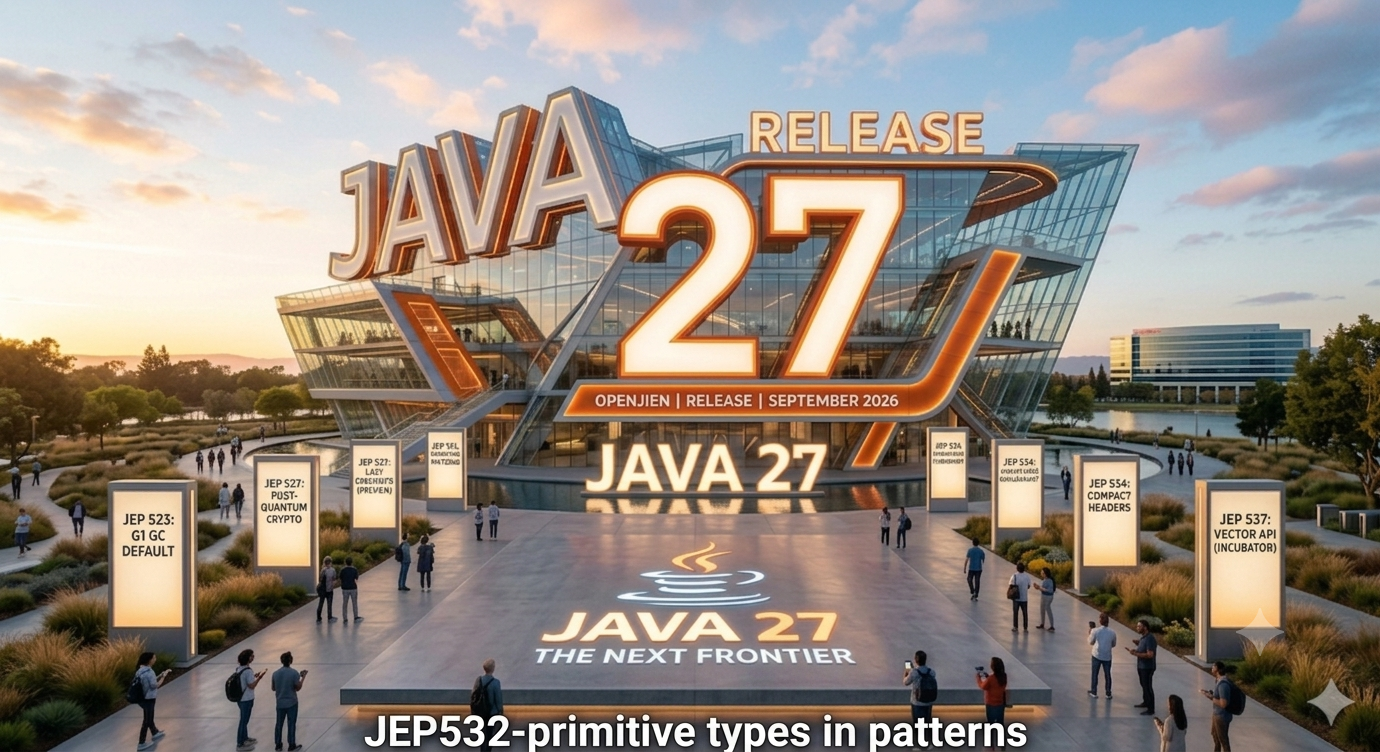
Primitive Types in Patterns

Java 27 - part 4: JEP 532 - Primitive Types in Patterns

Same Feature, Fifth Time Around If you read my JEP 530 post at the tail end of the Java 26 series, this one is going to feel familiar. Very familiar. JEP 532 is the fifth preview of “Primitive Types in Patterns, instanceof, and switch”, now targeting JDK 27. And here’s the honest headline: nothing has changed. No new syntax, no removed methods, no behavioural tweaks. The JDK team looked at JEP 530, decided it was in good shape, and re-proposed it as-is to bake for another release cycle. ...

June 15, 2026 · 5 min
Spring AI Series: Introduction to Spring AI

Spring AI Series: 2-Setup Spring AI

Intro In the previous article, we ran a Spring AI application in about twenty lines of Java. It worked. A ChatClient appeared out of nowhere, we called .prompt().user(...).call().content(), and Claude answered. That’s the magic of Spring Boot autoconfiguration — and also the danger of it. When things work without explanation, you’re fine right up until you need to debug something, customise something, or explain to a colleague what exactly is happening. Then you’re stuck. I’ve been there more times than I care to admit — staring at a NoSuchBeanDefinitionException at 4pm on a Friday, completely unable to explain why a bean that “should just be there” isn’t. (It was a missing property. It’s always a missing property.) ...

June 12, 2026 · 14 min
Spring AI Series: Introduction to Spring AI

Spring AI Series: 1-Introduction to Spring AI

I still remember the moment it clicked — and the much longer stretch before it did. I’d been building Spring Boot applications for years. I knew the ecosystem. I knew how to wire beans, configure starters, and navigate the autoconfiguration magic without panicking. Then I started exploring Spring AI, and suddenly I was lost again. Embeddings. Vector stores. RAG pipelines. Advisors. ChatClient vs ChatModel. A wall of new terminology that felt completely disconnected from everything I already knew. ...

June 6, 2026 · 7 min
Lazy Constants

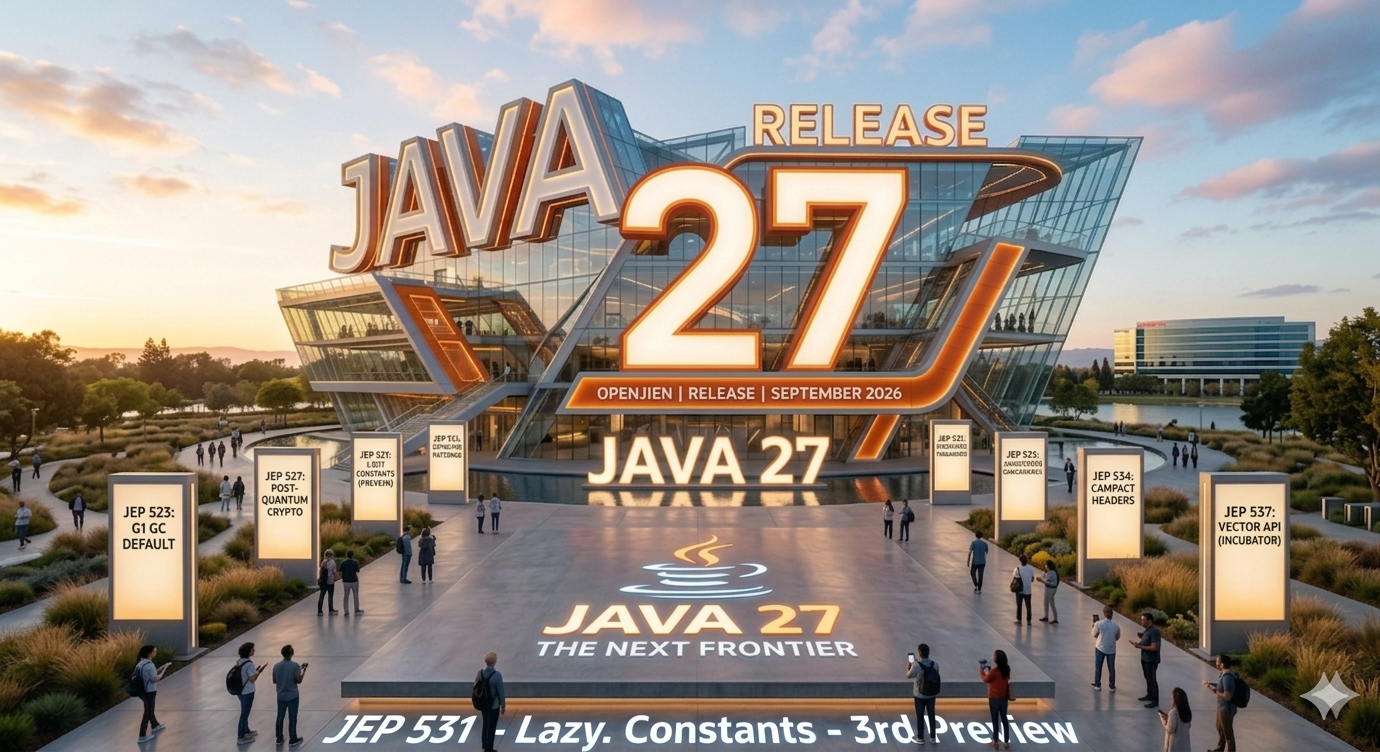
Java 27 - part 3: JEP 531 - Lazy Constants, Round Three

Third Time’s the Charm: Lazy Constants Get a Trim and a New Trick Back in the Java 26 series, I walked you through JEP 526 and the (then) second preview of the Lazy Constants API. If you missed it, the short version is this: Java finally got a clean way to do deferred immutability — fields that initialize on demand but, once set, are treated by the JVM as if they’d been hard-coded constants. No more double-checked locking. No more holder idioms. Just LazyConstant.of(...) and a .get(). ...

May 27, 2026 · 4 min
Structured Concurrency

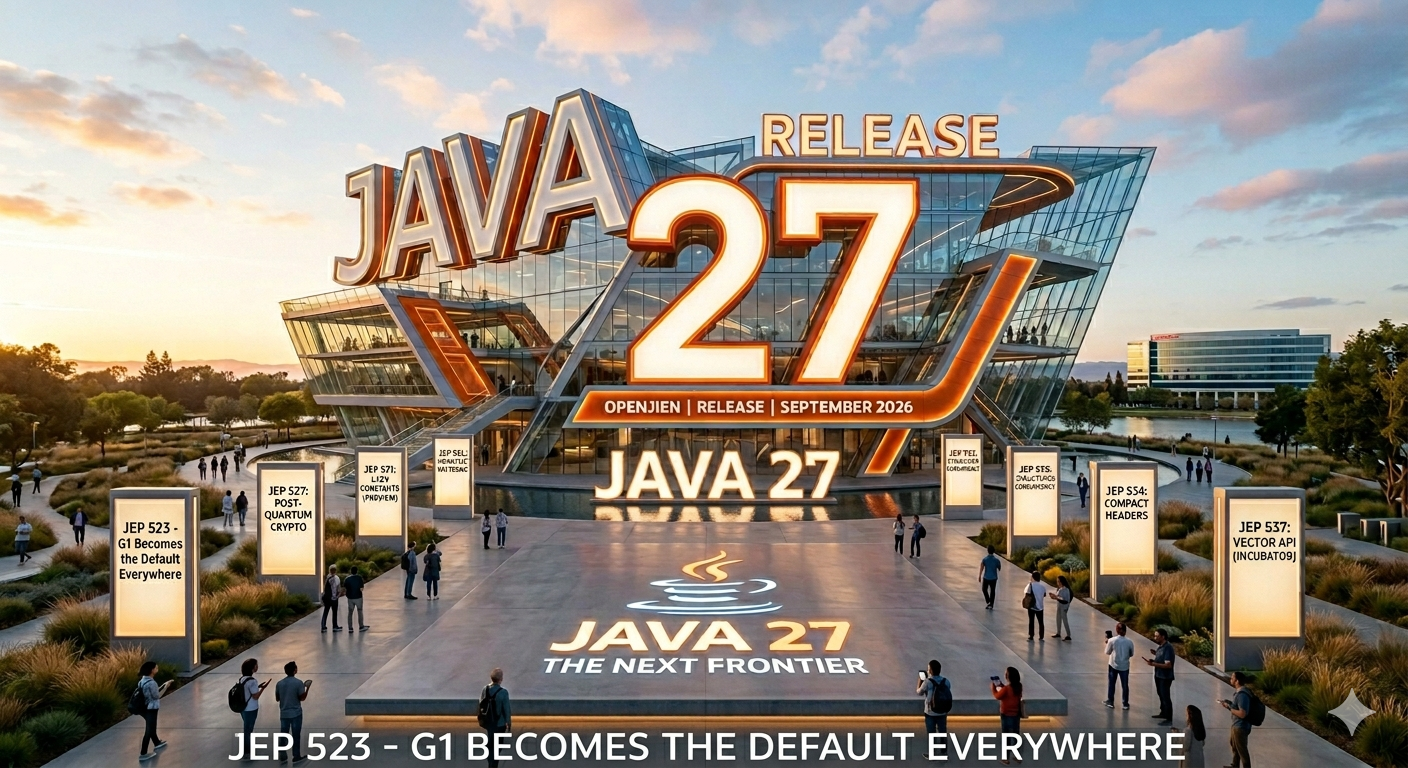
Java 27 - part 1: JEP 523 - G1 Becomes the Default Everywhere

G1 Garbge Collector, Always. If you’ve ever wondered which garbage collector the JVM actually picked for you when you didn’t tell it which one to use, the answer was always a little annoying: “well, it depends.” That “it depends” is exactly what JEP 523, targeting JDK 27, gets rid of. From now on, when you don’t specify a collector on the command line, the JVM always picks G1. No exceptions, no hardware-dependent surprises. Let me walk you through what’s changing and — more importantly — whether you should care. ...

May 22, 2026 · 5 min
Pattern Matching for primitives

Java 27 - part 2: JEP 527-Post-Quantum Hybrid Key Exchange for TLS 1.3

Java 26 has just been released! (depending on your timezone), but work on Java 27 is already on the way. The first JEP of the new release is JEP 527: Post-Quantum Hybrid Key Exchange for TLS 1.3. JEP 527 (Post-Quantum Hybrid Key Exchange for TLS 1.3) is a Java enhancement designed to protect your internet communications from future quantum computers. Here is the breakdown in easy terms: 1. The Problem: “Harvest Now, Decrypt Later” Today, when you connect to a website (using HTTPS/TLS), the “key exchange” that secures your connection uses math (RSA or Elliptic Curve) that is very strong for current computers but could be cracked by a powerful quantum computer in the future. ...

March 15, 2026 · 4 min
Pattern Matching for primitives

Java 26 - part 10: JEP 530 - Pattern matching for primitives

Java Pattern Matching: The Missing Piece (JEP 530) We have reached the 10th and final JEP of the Java 26 series. If you’ve been following Java for the last few years, you know the language has been on a massive “glow-up” journey. It was Project Amber that brought us records, sealed classes, and pattern matching. And this last one has been the stars of the show. It started as a way to stop writing those annoying casts after an instanceof, and it’s grown into a powerful tool for data-driven code. ...

March 6, 2026 · 4 min
Vector API

Java 26 - part 9: JEP 529 - Vector API

Java’s Vector API: The Marathon Continues (JEP 529) The Vector API is a new addition to the Java standard library that allows you to perform vector operations on arrays in a single CPU cycle. If there were a Guinness World Record for the “Longest Incubating Feature in Java History,” the Vector API would be holding the trophy. With the arrival of JEP 529, the Vector API is entering its 11th round of incubation in JDK 26. ...

March 5, 2026 · 3 min
Lazy Constants

Java 26 - part 8: JEP 526 - Lazy Constants

Bye-Bye Boilerplate: Say Hello to Java’s New “Lazy Constants” If you’ve ever had to initialize a heavy object only when it’s actually needed, you know the drill. You probably reached for the “Double-Checked Locking” pattern (which is easy to mess up) or the “Initialization-on-demand Holder” idiom (which is verbose). JEP 526 (Lazy Constants), coming as a second preview in JDK 26, is here to retire those old hacks. It introduces a first-class way to handle deferred initialization that is thread-safe, easy to read, and—best of all—lightning fast. ...

March 1, 2026 · 4 min
Structured Concurrency

Java 26 - part 7: JEP 525 - Structured Concurrency

The “No More Thread Leaks” Update: Java’s Structured Concurrency (JEP 525) If you’ve ever written concurrent Java code using ExecutorService, you know it can feel like herding cats. If one task fails, the others just keep running in the background like zombies, eating up resources and making debugging a nightmare. Structured Concurrency is here to fix that. It treats a group of related tasks as a single unit of work. If the main task is cancelled or fails, all its sub-tasks are automatically shut down. No leaks, no orphans, no headaches. ...

February 26, 2026 · 5 min